



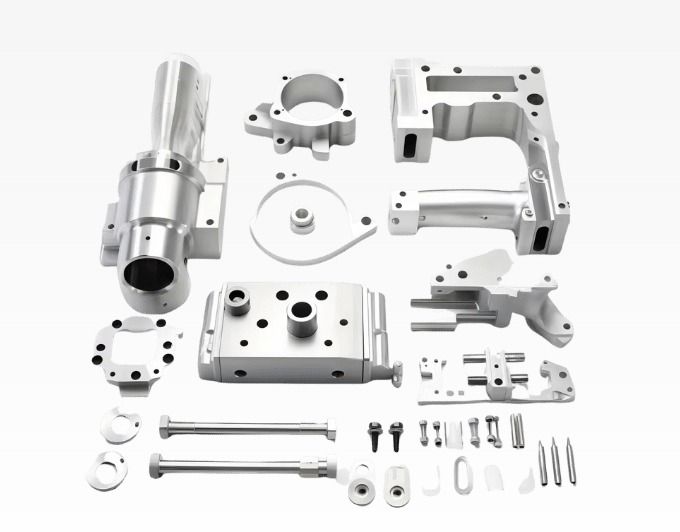
What is cnc machining and How Does it Work?
Understanding the Machining Process
CNC (Computer Numerical Control) machining is a type of manufacturing technique that is automated, as its name suggests. It involves the use of a CNC machine, wherein computer software controls the movement of tools and machinery, therefore automating the processes of manual fabrication. The very first step is building a digital 3D model, which is done using CAD software. After that, the design is saved as a file in a format that can be interpreted by CNC machines; this excerpt of programming code is called G-code and it tells the machine which actions to perform (for example, cutting, drilling, milling, or turning). Along with its numerous advantages, CNC machining has become extremely popular due to its unrivaled accuracy, repeatability, and efficiency across almost all global industries.
For more in-depth information, you should view the CNC Machining Service – ETCN.
Components of a CNC Machine
Every CNC machining device is composed of several important constituents that function together to execute machining operations:
Controller: The primary frame of the CNC machine. The controller commands the procedure of the machine after interpreting the G-code.»
Machine Table: The position of the workpiece or the material being machined is secured on this part of the CNC machine.»
Spindle: The spindle carries out the machining by rotating at a high speed with cutting tools attached to it.»
Motors and Drive System: Moves the machine in the X, Y, and Z axes.»
Sensors: These devices are critical for precision, as they scrutinise processes and check for functional or misalignment issues. Once identified, corrective measures are taken.»
Tool Changer: This part permits autonomous changes between different adaptors which paves way for higher level functions without manual efforts.»
Common CNC Machining Materials
CNC machining can be used on a wide range of materials, making it useful for many industries and purposes. The most popular materials for CNC machining are:
- Metals: These include aluminum, copper, stainless steel, brass, and even titanium. Users like their strength and versatility.
- Plastics: These include ABS, polycarbonate, nylon, and POM (Delrin). These are used for applications where low weight and cost are required.
- Composites: These include carbon fiber or fiberglass. They have a high strength-to-weight ratio, which is useful in many specialized industries.
- Wood: Commonly used for prototypes and decorative elements where precision woodworking is needed.
Selection of the material is based on project requirements which may include, mechanical properties, thermal resistance, and cost efficiency.
What Are the Benefits of Using an online cnc machining service?
Convenience of Ordering Custom Parts Online
The convenience offered by these companies is unrivaled because they deal with parts for both individuals and businesses. Users can upload designs and specify the materials they want and get a quote within minutes. Comparing this to the traditional way of doing it that involved meetings makes one appreciate the changes brought about by technology. In addition to that, it can be done at any time because these services are offered 24/7.
Understanding CNC Machining Service Prices
Different factors affect the price of CNC machining services. It includes the materials used, the complexity of the part, the volume to be produced, and how the part will be machined. It goes without saying that custom parts with high precision geometries would take more time to machine which is why the cost would go up. Furthermore, using considerably high-quality materials would also increase the price. in order to reduce the cost, it is best to improve the design to make it simpler.
Acquiring CNC Machined Parts That Are Readily Available
The CNC machining services offered online include a WGPs catalog with parts and capabilities inventory like no other. They serve all sectors including automotive, aerospace, electronics, and medical technology, alongside fulfilling prototype requirements and developing complete components. Users can procure parts that meet their specifications as they offer multiple materials, finishes, levels of precision, and other options. Moreover, having unrestricted access to a network of manufacturing professionals around the globe makes scalability and quality achievable across various project scopes.
How do you choose the right CNC machining service for your needs?
Evaluating CNC Machining Capabilities
While choosing a CNC service provider, it is critical to check their capabilities against your requirements and project needs. Consider the range of available machineries, such as 3, 4, or 5-axis CNC machines, as well as their capabilities in working with metals, plastics, and composites. Evaluate their precision tolerances and whether the service meets the desired design specifications. Also, check the service’s response time, batch sizes, and production scaling capabilities without degrading quality.
Comparing Custom CNC Options
Evaluating providers on a more granular level, such as offered features or expertise in executing specific machining services like anodizing and polishing, can be helpful in achieving defined finishes. Some service providers also assist in designing or prototyping for advanced projects, enabling multiple iterations. Ensure the provider operates within your industry to leverage their experience with relevant standards and performance requirements.
Searching for a Dependable CNC Shop
Finding a reliable CNC machining shop requires some background work. To evaluate a provider’s previous work, check their feedback, customer reviews, case studies, and other relevant documents. A service provider with ISO 9001 or AS9100 certifications clearly states his commitment to quality and industry norms. Another major concern is communication; the provider must give accurate information and status updates during order fulfillment. Do not forget the shop’s location and shipping options in relation to your logistic needs and CNC deadlines.
What Are the Different Types of CNC Machines Available?
Features of a CNC Mill
The CNC milling machines are intended to accurately cut out material from a workpiece in order to create a plagiarized shape or size. These machines have many capabilities, such as multi-axial movements, which permit precise cuts to be performed on complex shapes. As with every other CNC mill, it has a spindle, a work table that holds the material, cutting tools, and a work table. Because of modern advancements, many models now include high-speed machining, automatic tool changers, and coolant systems, which improve efficiency and accuracy. These devices are used in diverse fields such as medicine, aerospace, automotive and engineering due to the repeatable accuracy they provide.
CNC turning machines Overview
CNC turning machines, or lathes as most people call them, use a rotating workpiece to create cylindrical parts of any kind, such as shafts, threaded pieces, and bushings. These machines have features such as automatic spinner arms for tools, bar feeders, and even tools that spin for more complex procedures. The process can be found in gasses and oil, huge electromechanical devices, and large scale machinery industries because turning is one of the fastest and most accurate ways to make parts.
Understanding 5-Axis CNC Technology
5-axis CNC technology is a modern form of machining as it allows simultaneous movement along five axes and can be pivoted in numerous directions. This is useful in the production of parts that have very delicate shapes or complex structures, such as turbine blades, medical implants, and parts for the aerospace industry. The advantages of 5-axis machining also include time efficiency during setup, savings on materials, and the ability to obtain exact measurements within the required limits in one operation. It is not uncommon that this technology integrates new features, such as advanced CAD/CAM software, which streamlines the design and manufacturing process, along with real-time monitoring of various processes to reduce productivity without compromising quality.
How Does Rapid Prototyping Fit Into CNC Machining?
Understanding the Importance of Prototypes
Prior to full-scale production, prototypes offer a tangible representation of the design and assist engineers and designers in evaluating functionality, identifying design flaws, and assessing overall manufacturability. Physical prototyping allows companies to iteratively reduce costly errors and ensure that the design accuracy, along with technical and customer requirements, are met. Prototyping serves as a mid-point between production and conceptualization, aiding in the understanding of a product’s performance in real-life scenarios. Prototyping is critical in the complete developing life cycle.
With CNC Rapid Prototyping, Product Development Becomes More Efficient
CNC rapid prototyping is known for being an advanced approach to creating functional prototypes, as it is both precise and time-efficient. Computer numerical control (CNC) machining enables engineers to produce prototypes from a range of materials like metals and polymers, ensuring that the final prototype mirrors the intended production part. This procedure is ideal for generating intricate and highly accurate models within small timeframes. Along with advanced CAD/CAM systems, the integration of CNC machining allows seamless transitions from digital designs to physical models which greatly improves the speed of development.
Benefits of Prototype and Production Parts Machining
CNC machining prototypes and production parts come with a variety of advantages, such as high acceptance, flexibility, and material selection. The precision of CNC prototypes allows for exceptional detail which aids in rigorous testing and validation in design specifications. Also, the range of materials that can be used ensures prototypes mimic the physical attributes of the actual production parts. After validation, a similar CNC configuration can often be employed for small to medium production runs which improves constancy and lowers turnaround times. This method helps companies reduce the time and cost spent during development and production without compromising on quality.
What Are Common cnc machining faqs?
How to Get an Instant Quote for Machining Services?
With regards to CNC machining services, quoting is also done in real-time, and it is made possible by sophisticated online quoting systems that many platforms have. In most cases, customers need to upload a CAD file of the design alongside material specifications, surface finish, unit count, and everything else necessary for a complete quote to be generated in no less than 10 minutes. These systems often come equipped with design-for-manufacturing (DFM) automation feedback, which confirms that the design is executable with regard to CNC machining. This procedure provides swift removal of hold-ups and offers unambiguous cost projections.
Standard Processing Times for Tailored Orders
The turnaround time for custom orders entails machining time, which is determined by the part’s complexity, material choice, and production volume. Features of simple parts are less complex and straightforward, thus can be machined in a few hours. However, intricate designs often take several days. Other processes such as surface finishing, post machining inspections, and others often add to overall lead time. Custom orders are usually optimized by the custom order technicians, thus ensuring that balance of efficiency and quality is achieved.
Modern CNC Technologies: Possibilities With Metal and Plastic
Indeed, modern CNC technologies are highly versatile as they can efficiently process both metal and plastic materials. For example, aluminum, stainless steel, and titanium can be accurately machined, just like ABS, nylon, and polycarbonate plastics. Selection of one material over another is based on application – metals are considered stronger and more durable, whereas plastics are lightweight and typical with corrosion resistance.